Building a UX lab where surveys fell short
The brief
Where this started
NHC's app served thousands of users with usability problems nobody could fully explain: surveys and reviews lacked the depth to reveal behavioural pain points and cognitive friction. I designed and established a dedicated UX lab to capture real-time behavioural analytics and turn them into design improvements.
The friction
What was getting in the way
Traditional feedback methods couldn't identify where and why users actually struggled.
No infrastructure existed for behavioural research.
Product teams needed evidence, not opinions, to guide iteration.
The response
What we built instead
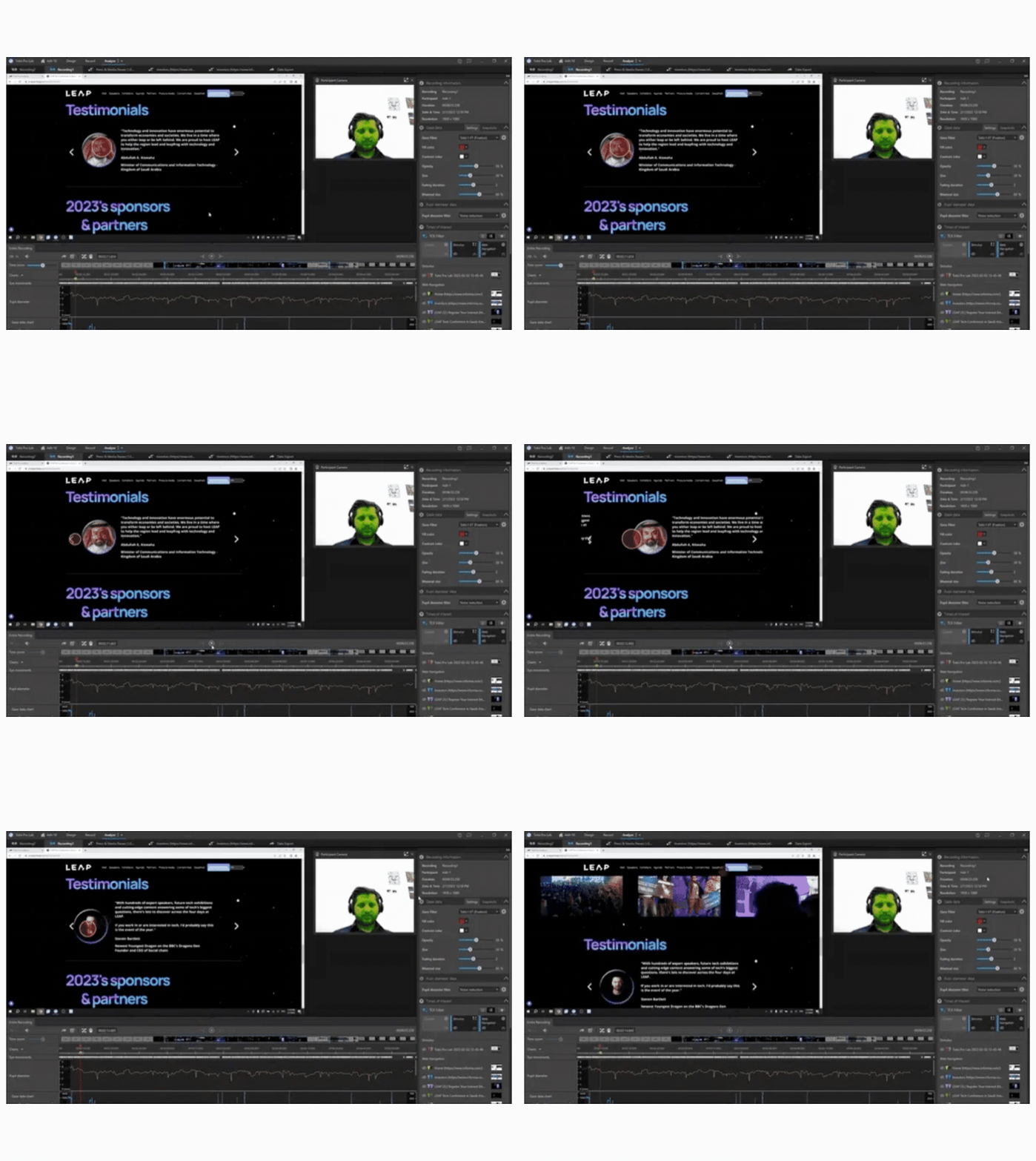
A UX lab environment equipped with Tobii screen-based eye tracking and ProLab analytics software.
Capture of eye movement and gaze patterns to evaluate attention and cognitive load.
In-depth usability testing with both lab participants and field research.
Qualitative feedback combined with quantitative analytics for holistic evaluation.
The method
How the evidence led there
Lab setup
deployed the Tobii eye-tracking solution at NHC's public office for real-time testing.
Methods
heuristic evaluation, competitive analysis against industry leaders, A/B testing of design decisions, and cognitive walkthroughs of task flows.
Field research
authentic user interactions captured in natural settings.
Analytics integration
ProLab configured to generate heatmaps, gaze plots and attention metrics: quantifiable engagement insights.
The result
What changed
A UX lab framework that became the organization's reference model for usability testing.
Behavioural insights exposing overlooked bottlenecks in navigation, content hierarchy and interaction design.
Design improvements validated with evidence, reducing guesswork in product iterations.
A repeatable post-launch measurement practice embedded into design roadmaps.
Why it matters: Post-launch measurement, institutionalized: the continuous-improvement loop every product organization says it wants.
Full walkthrough deck, Miro boards and Figma prototypes available on request (NDA-protected). Get in touch.